How to Warm Corn Tortillas for Tacos
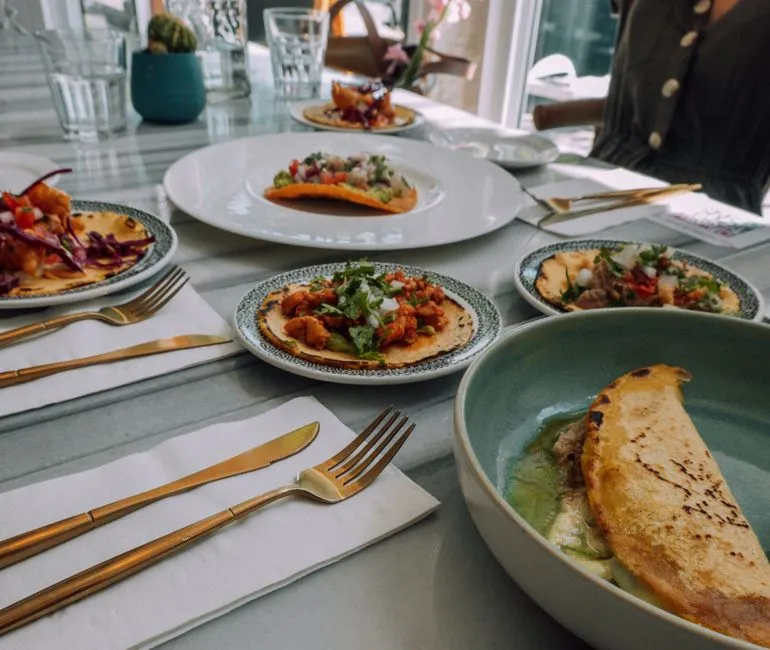
Warm corn tortillas with moisture, heat, and a proper rest
The simplest way to warm corn tortillas is in a dry skillet over medium heat for about 20 to 30 seconds per side, then stack them inside a clean folded towel. The skillet restores flexibility and a little toasted aroma; the wrapped stack traps enough steam to keep each tortilla pliable. Warm only what you expect to serve soon.
Cold corn tortillas often crack because their starches have firmed and the surface has lost moisture. Heat makes them flexible again, but heat without a covered rest can also dry them out. Think of the towel as part of the method, not festive tortilla upholstery.
Use a dry skillet for the best small batch
Preheat a clean cast-iron, carbon-steel, or nonstick skillet over medium heat. Do not add oil. Lay down one tortilla and heat it until it smells distinctly of toasted corn and becomes flexible, usually 20 to 30 seconds. Turn it with tongs and warm the second side for roughly the same time.
Small brown freckles are welcome; stiff edges and dark, brittle patches mean the pan is too hot or the tortilla stayed too long. Adjust the burner rather than racing every tortilla through an increasingly dramatic skillet.
Move each warm tortilla into a towel-lined basket or lidded container and cover it immediately. Continue stacking so the newest tortilla shares steam with the rest. For a table of four, two skillets can halve the waiting without changing the method.
Browse taco technique for more texture-first kitchen fixes.
Wrap tortillas for oven warming
For a larger batch, heat the oven to 350°F. Stack 12 to 16 tortillas and wrap them tightly in foil. If they seem dry, flick a few drops of water across the stack before sealing; they should be barely damp, never wet. Place the packet in the oven for 10 to 15 minutes.
Open one edge carefully because hot steam can escape. Test a tortilla from the centre. If the stack is not flexible and warm throughout, reseal it and return it for a few minutes. Keep the packet closed until serving.
Do not put a fabric towel in the oven unless its maker explicitly rates it for that use. Foil handles the hot job; the towel can receive the closed packet at the table.
Use the microwave when speed wins
Wrap up to six tortillas in a clean, damp—not dripping—paper towel. Place them on a microwave-safe plate and heat for about 30 seconds. Check the centre of the stack, then continue in 10-second bursts if needed. Microwave power and tortilla thickness vary, so the first batch is your calibration round.
Transfer the tortillas to a dry cloth or covered warmer after heating. Leaving them inside a wet paper towel can make the surfaces gummy, while leaving them uncovered makes the edges stiff. The useful window sits between swamp and stationery.
Keep the stack flexible at the table
Serve from the covered stack and close it after every round. Put fillings, salsa, and garnishes on the table before warming tortillas; flexibility has a clock, and nobody has improved a tortilla by making it wait through an avocado search party.
Double up only when the filling is very wet, heavy, or likely to tear a thin tortilla. Two tortillas are not a mandatory badge of authenticity. Start with one properly warmed tortilla and add support when the actual taco needs it.
For a complete brunch, use the skillet method while making our crispy potato breakfast tacos. The wrapped tortillas can rest while the eggs finish.
Reheat leftovers once, gently
Cool unused plain tortillas promptly and return them to a sealed package or container in the refrigerator according to the package directions. Store cooked fillings separately. A tortilla that touched meat, eggs, cheese, or salsa should be handled according to the most perishable ingredient rather than slipped back into the original bag.
Rewarm refrigerated tortillas with the same skillet method, adding a drop or two of water only if the surface seems dry. Discard tortillas with mould, an unusual odour, or package damage. Warming can restore flexibility; it cannot reverse spoilage, which is an unfair amount of responsibility to place on a frying pan.
Explore brunch recipes when the warm stack needs somewhere delicious to go.